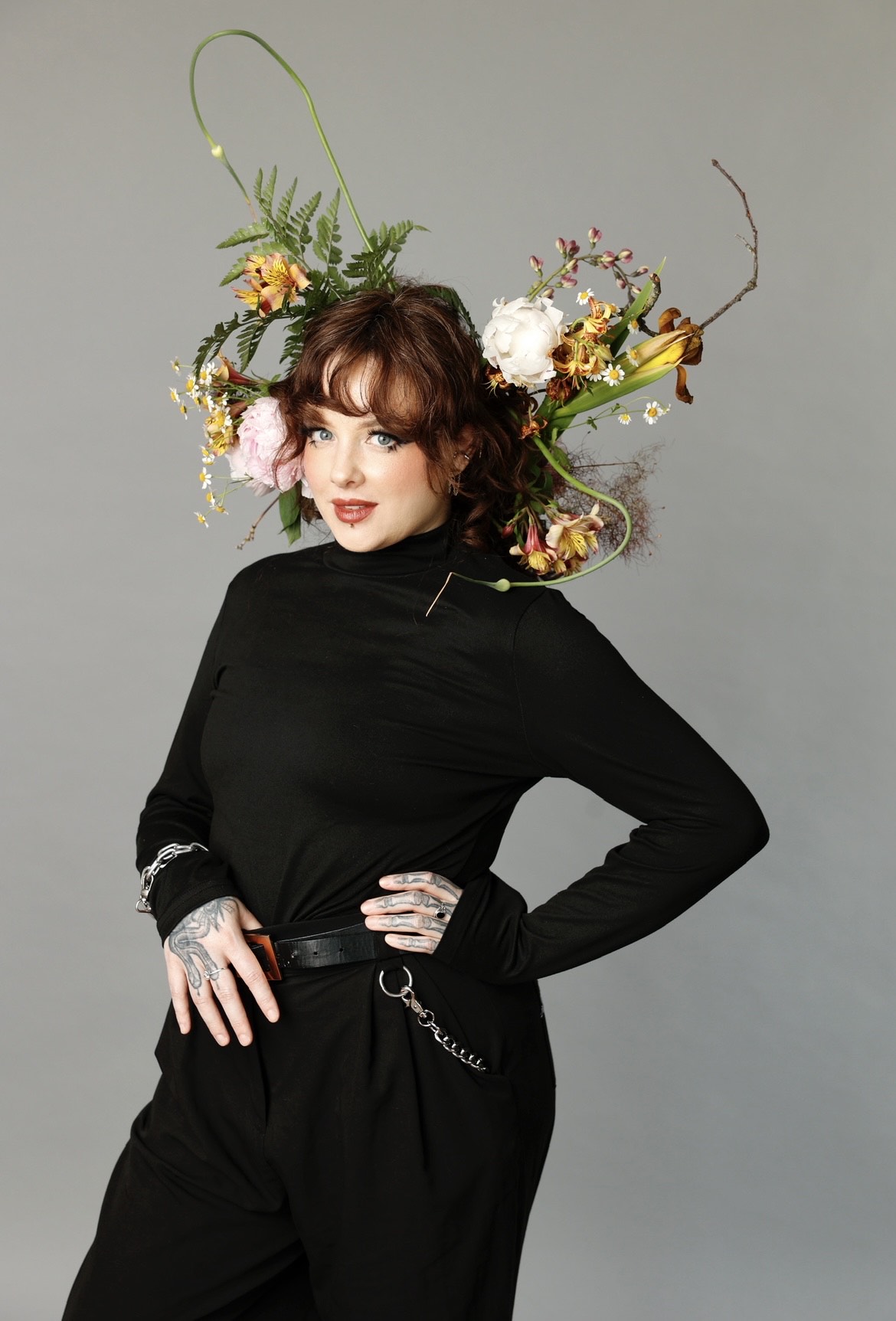
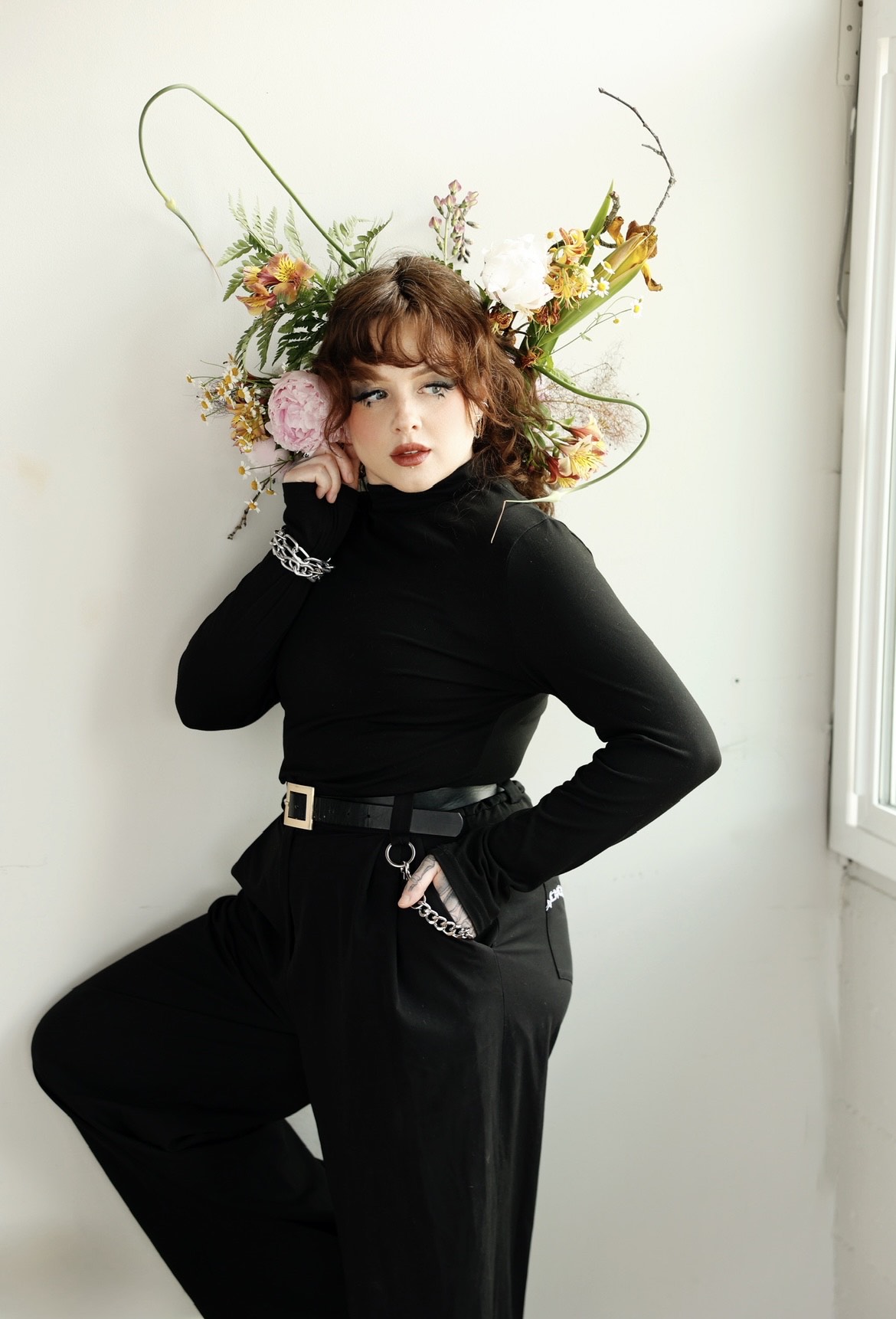
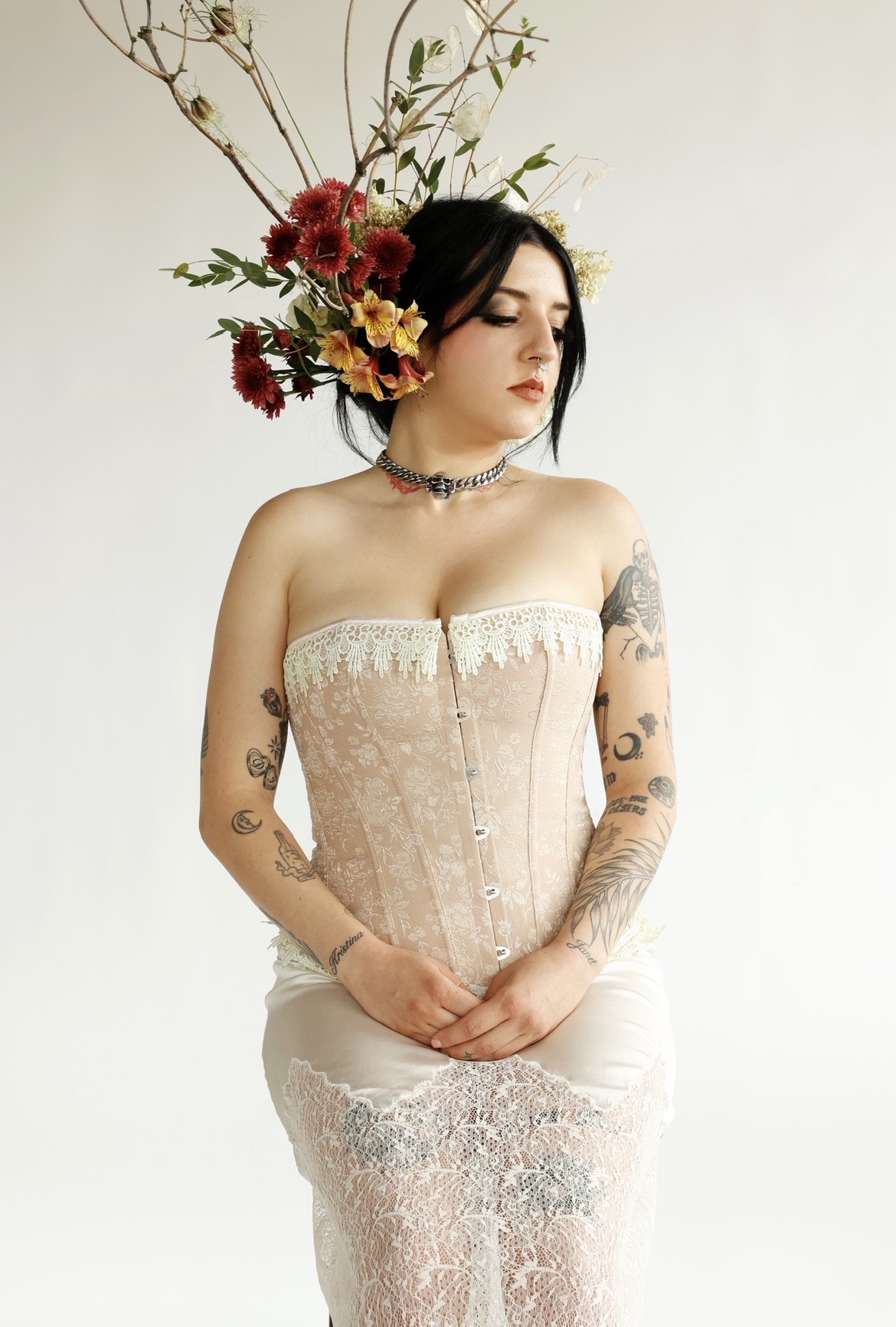
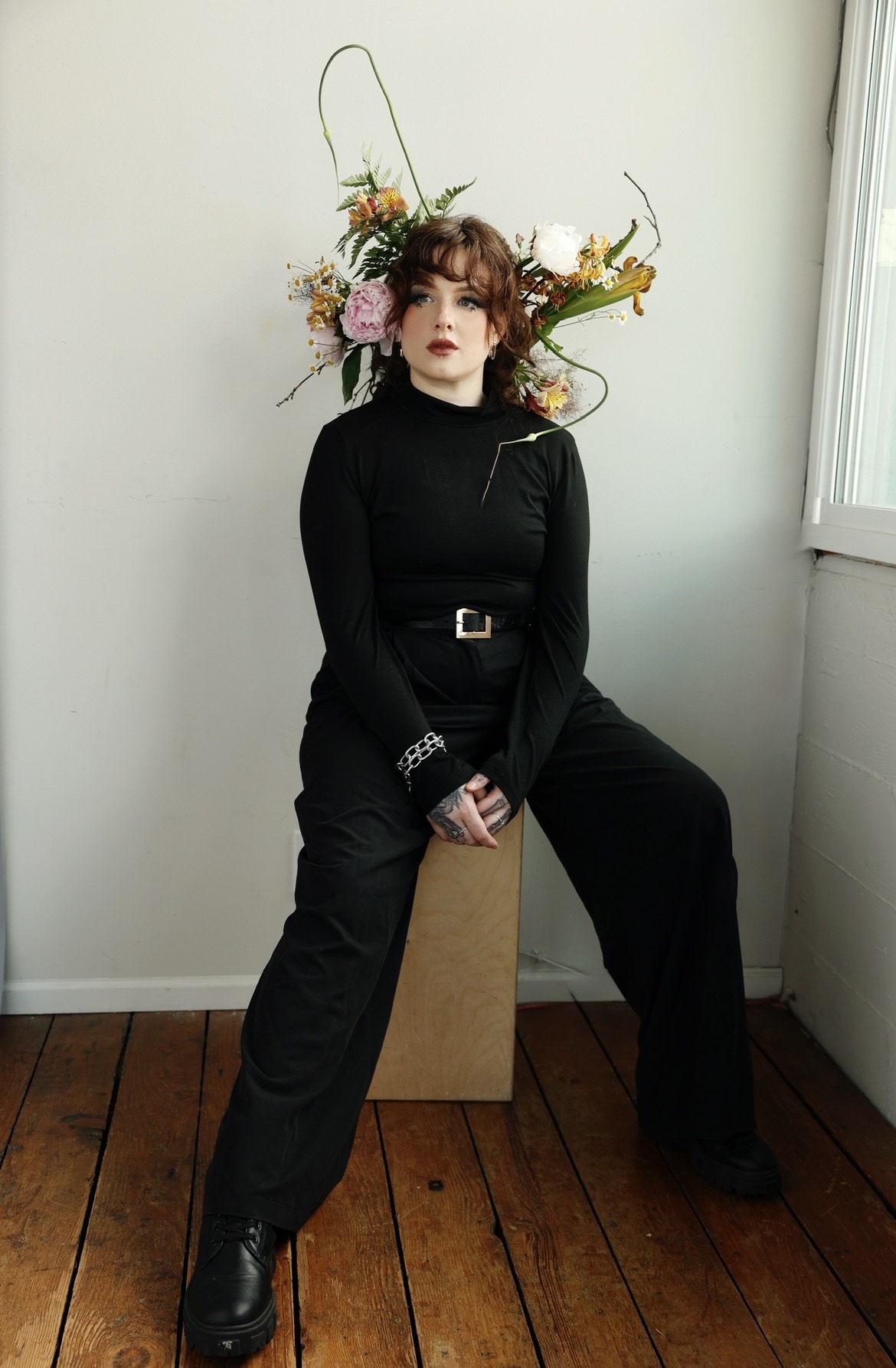
In 2023 I began studying Sogetsu Ikebana here in Seattle, WA. For anyonethat may not know, Ikebana is the Japanese art of flower arranging, and Sogetsuis one of the many schools or forms of ikebana that can be studied. The artitself highlights minimalism, linework, and depth, while Sogetsu is known forits emphasis on creative freedom and structural forms.
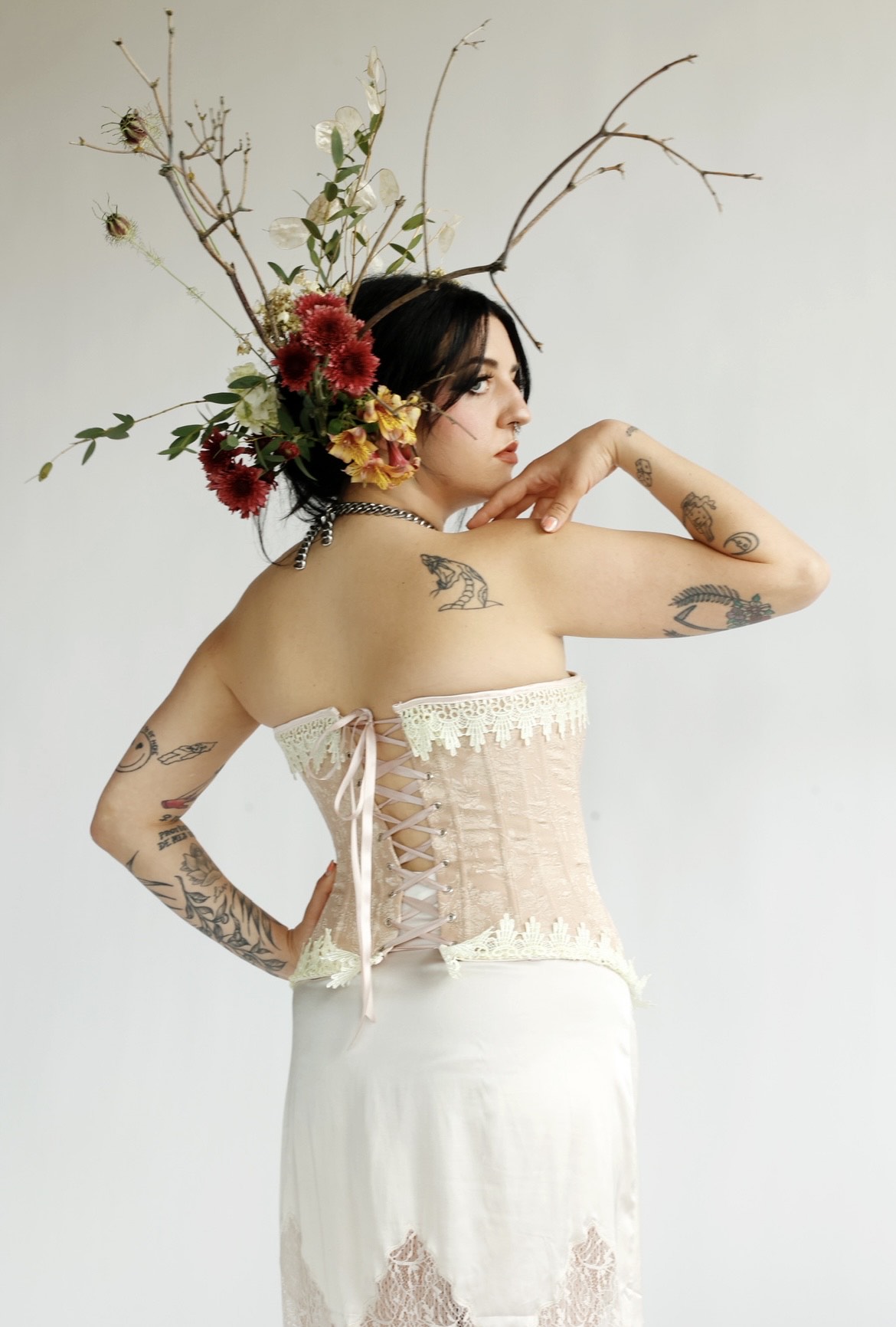
A goal I had early on in my training was to do aproject combining both my interest in hair design with what I learned ofIkebana. This past summer, in July of 2025, I organized a photoshoot andfinally got to cross it off my to-do list.
I knew I wanted to create an asymmetrical pieceon one of my models using a large tree branch, and I knew it would require morethan a bobby pin. In ikebana there are a variety of base options, but the mostcommon and traditional is the kensan, asmall weighted base comprised of multiple needles used to pierce and hold thematerials in place. Not exactly something most people want to have attached totheir head. It was clear I was going to have to find a different way to securethe plant material safely and effectively to the models.
When I worked at a salon in Spokane, WA, Itrained under a coworker who had been doing wedding styles since she was 13.While I’m by no means a master, I learned a lot about the art of styling fromher and enjoy the process and discovery I find in it. One of the most valuablelessons I learned in that time is the importance of creating a base for thestyle. Some styles naturally create their own base, like a chignon or prettymuch anything with a bun. However, sleek styles or those created on fine, softhair often need a little help and can require an internal structure that’shidden, making the style appear effortless.
It took me a while to come up with a gameplan, but I remembered that while most Japanese floral pieces don’t use much ofa base, Western floral arrangements do. Instead of reinventing the wheel, Iexplored my options. Originally, I considered using green floral foam, but Iwasn’t sure if it would be too compact, heavy, or messy for the shoot. Instead,I decided to use a piece of floral wire netting as my secret weapon. I snippeda small square of the netting and bobby-pinned it along the back of the model’shead under the topmost layer of hair. It did bunch up a bit, and creating anelegant updo with flowers coming out of it was going to prove difficult.Instead, I placed the materials into the netting and organically wrapped andtwisted the hair around them to support the florals and shape the style. I keptin mind the silhouettes found in traditional updos while incorporating as manyprinciples of ikebana as possible around the entire head so that it could bephotographed at various angles.
I’m very happy with how these pieces turnedout. Creating them without a clear base meant styling on a curved surface whilesuspending materials in space and making sure the designs were photo-ready fromevery angle was a rewarding challenge. I learned a lot, and next time I wouldconsider using multiple smaller bases at different points around the head foreven more intricate arrangements. Even though the wire netting was the MVP, itstill needed a little help from pinned hair for stability, and the materialssometimes needed to be snipped at different angles or braced against thenetting rather than fully woven into it.
It has been a while since my last officialikebana class, but it is something I really enjoy and hope to continue, even ifat a slower pace. Exploring this fusion of modern ikebana and sculptural hairdesign has been one of my most rewarding creative projects so far, and I can’twait to continue experimenting with floral hair art in Seattle and beyond.